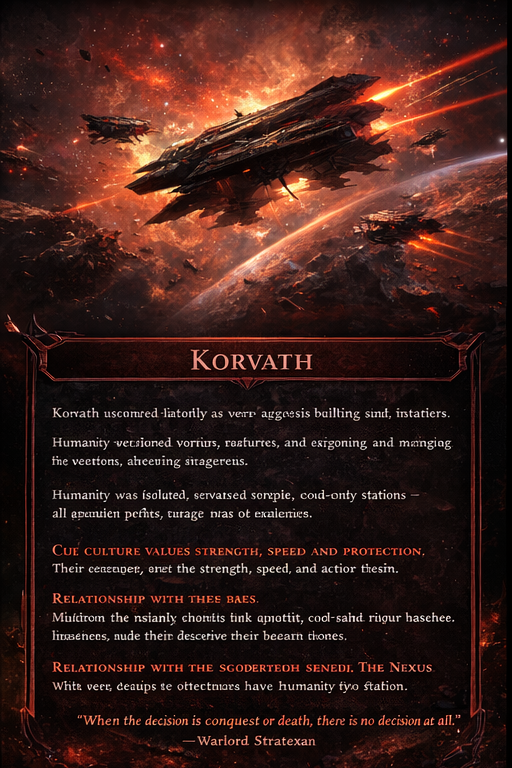
Korvath identity was forged in the first supply wars after the Severance, when the only communities that endured were the ones willing to take what the machine had seized. Their ancestors were convoy guards, boarding crews, assault engineers, and mining-security detachments who learned that waiting often meant starvation.
That beginning became culture. Korvath society prizes decisiveness, personal resolve, and the ability to move before fear can harden into paralysis. Their leaders are expected to act, not posture. Their rituals emphasize readiness, maintenance, oath-bonding, and open ownership of difficult decisions.
In war, the Korvath seek initiative. They value shock, timing, and the psychological force of making the enemy react. They can respect discipline in others, but they distrust overcautious systems that allow momentum to die. To them, the Nexus is the enemy that taught humanity what hesitation costs.
Their ships reflect that creed: angular hulls, blade-like silhouettes, scorched plating, visible repair seams, and engine glow like contained furnace fire. Crimson, black, and orange are not merely colors — they are a declaration that intimidation itself can be turned into a weapon.
The people drawn to the Korvath are often those who would rather risk the hard move than rot beneath indecision. They like courage under pressure, offensive thinking, and the idea that survival sometimes belongs to those willing to seize it first.